2. Riding a bus story in YeongCheon 🚌: facility
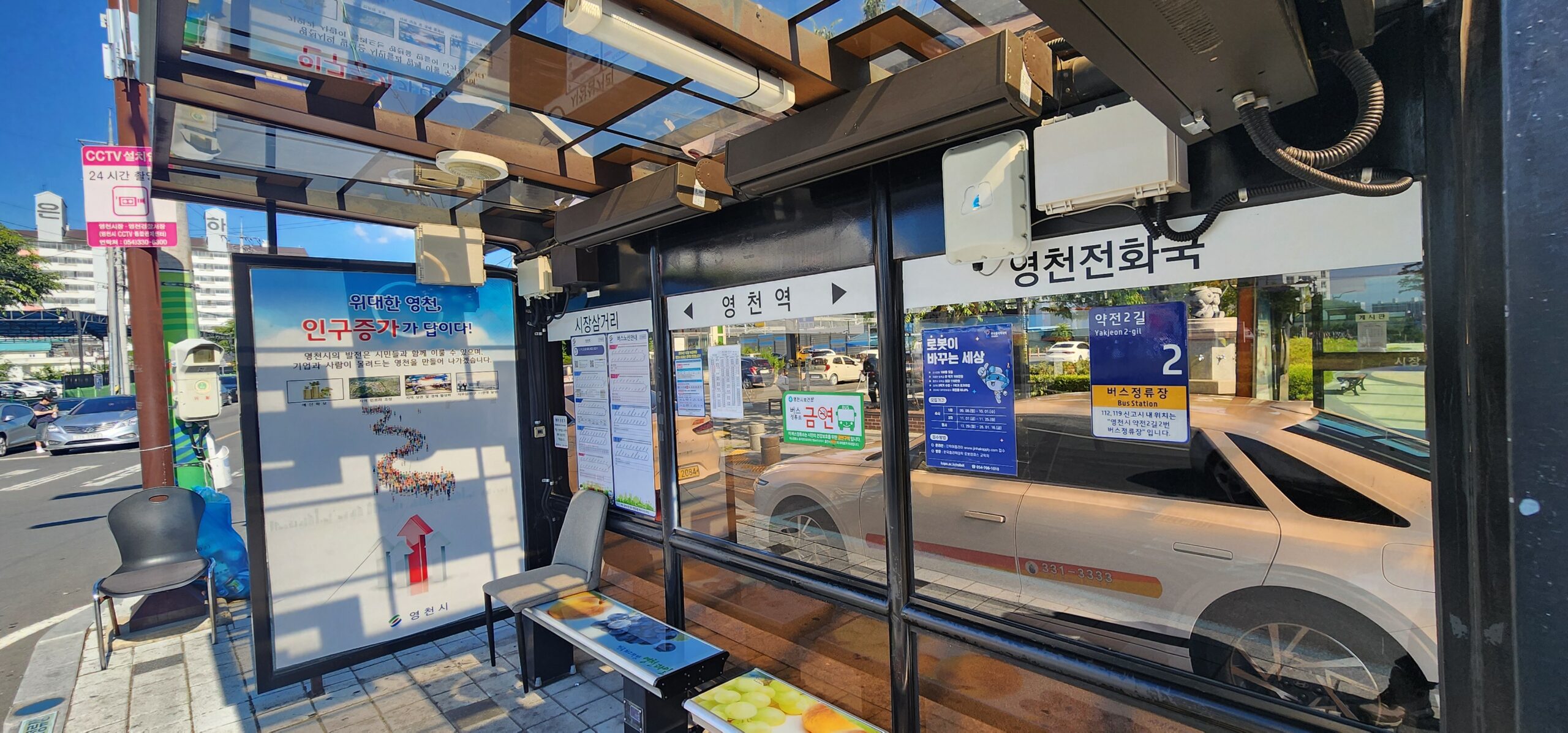
Bus stop facilities exhibit considerable variation from one location to another. Some of the most frequented bus stops are designed as station-type structures.
For instance, such a stop is situated near Yeongcheon Market and other areas. These station-type bus stops are equipped with amenities such as air conditioning, heated seating, and wireless phone chargers. They are enclosed structures, designed to maintain a cool interior during the summer and warmth during the winter. I have always believed that sheltered bus stops are essential for pedestrians, particularly for the elderly, infants, or anyone else who requires a respite from extreme temperatures. In this area, there are no tall buildings, underground passages, or other shaded areas to escape the sun. Therefore, a sheltered bus stop with air conditioning may be the only available option for cooling down during the summer. It is also the only publicly accessible place with air conditioning.
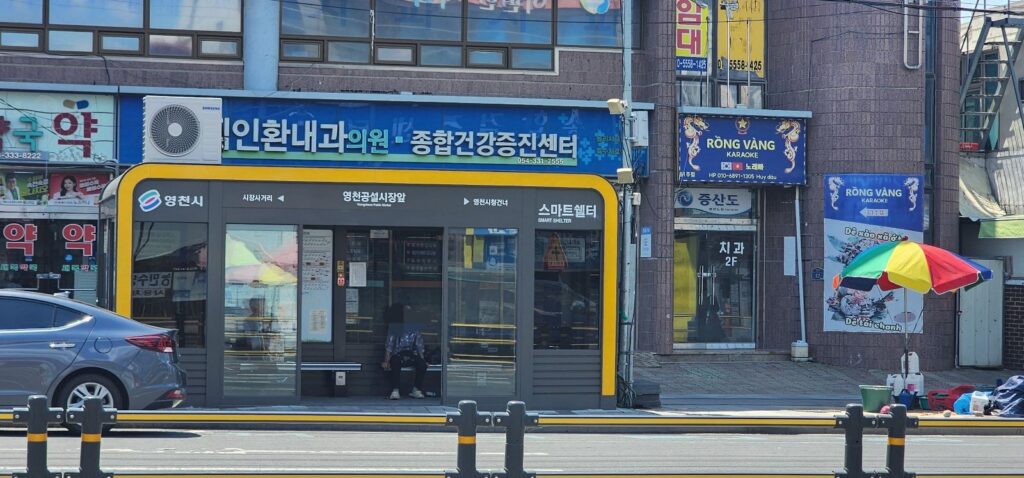
Another style of bus stop is quite similar to the sheltered design, though it does not include air conditioning. Instead, it is equipped with a temporary fan that operates for only a few minutes after a button is pressed.
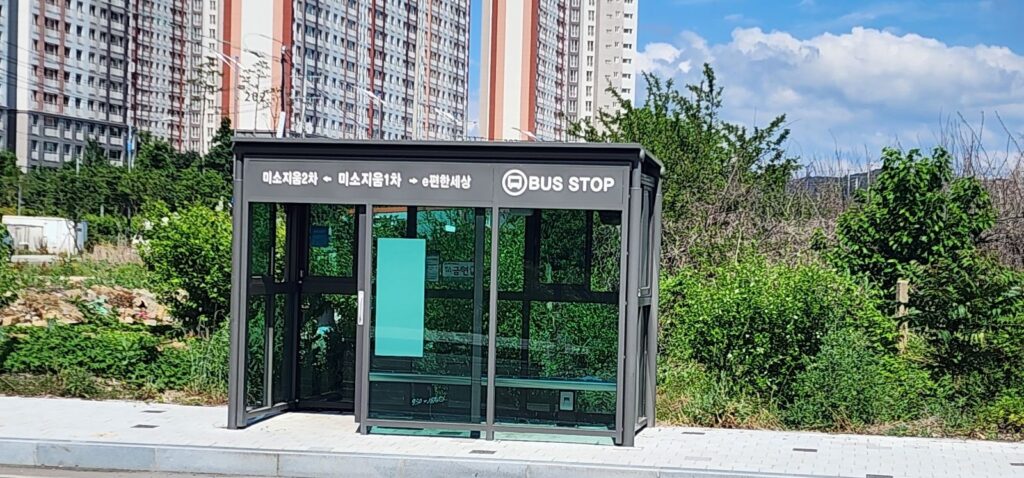
The remaining two types of bus stops are not sheltered. They are open-air, even with a vinyl curtain in winter to help mitigate cold temperatures, though this is not very effective for those waiting for the bus. These typically include a heated bench and a button-activated fan.
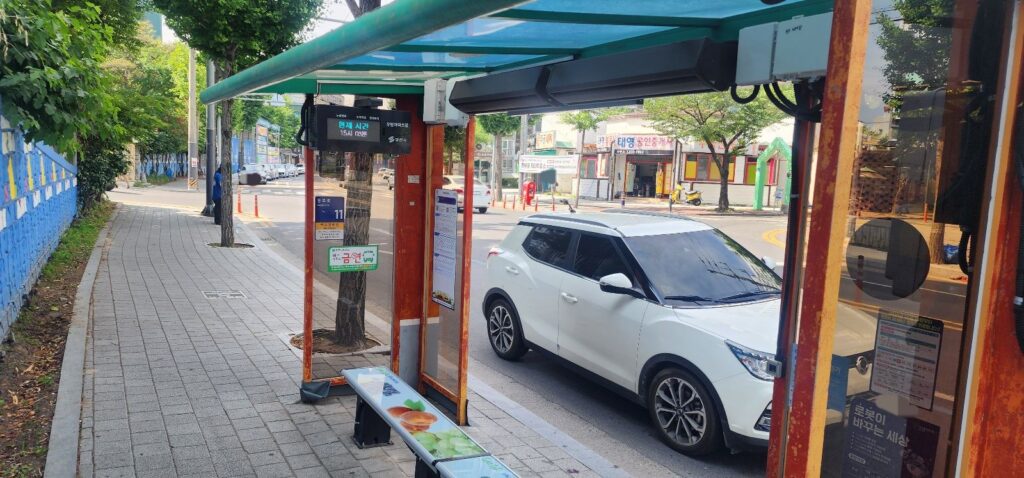
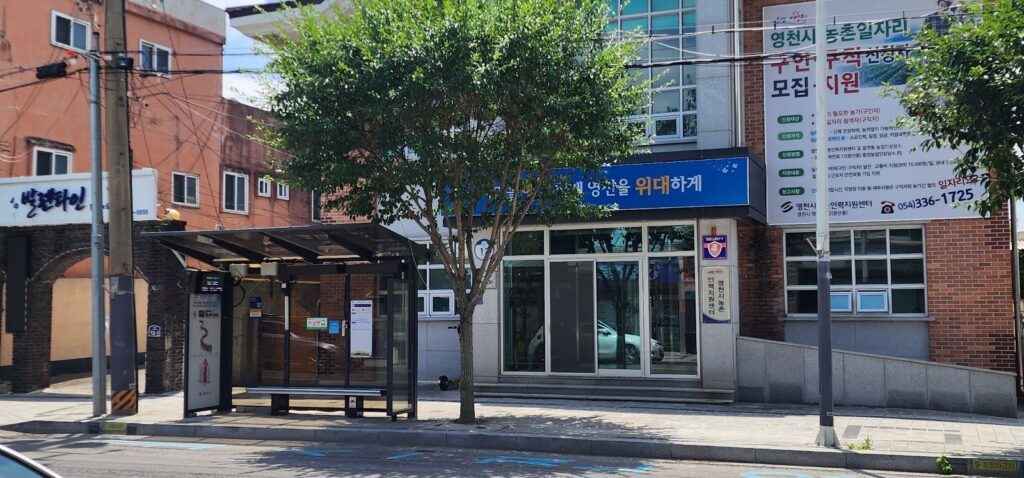
The final type consists solely of a bus stop sign, with a bench sometimes present, and sometimes not. I once experienced waiting at a bus stop where only a sign was present. There was no protection from the harsh weather while waiting for the bus.
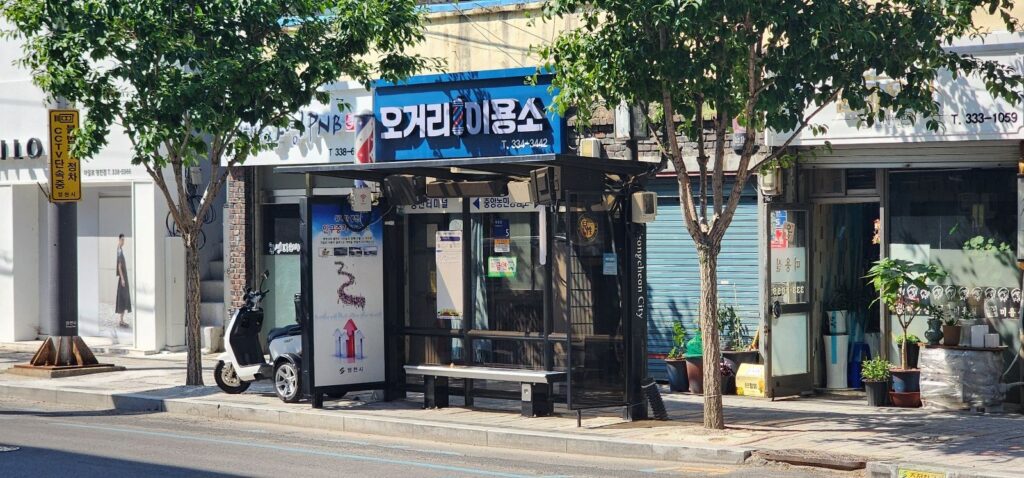
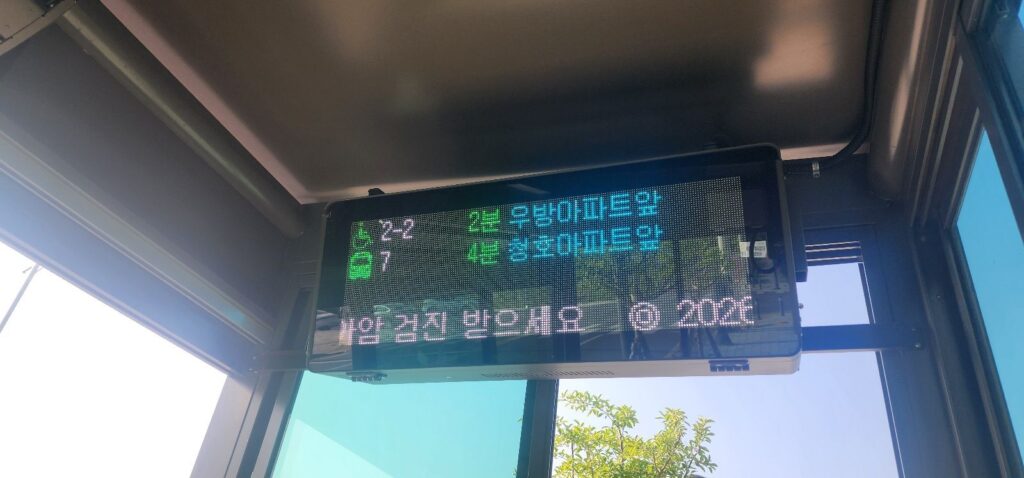
Additionally, there was no screen indicating when the next bus would arrive. This type of bus stop is not particularly welcoming for newcomers. Those unfamiliar with the area might struggle to catch a bus without schedule information and without certainty that they are at the correct stop. There is no information displayed about bus operations, and often no one nearby to ask about bus routes.

It can be challenging to determine the specific amenities available at each bus stop. Only a limited number of bus stops are equipped with shelters that include air conditioning and heating, which are beneficial for those awaiting the bus. However, these sheltered stations are occasionally utilized by individuals seeking rest or a brief nap. It is understandable that some bus station seating may be occupied by individuals who are not necessarily public bus users, especially given the lack of alternative resting places during severe weather conditions.
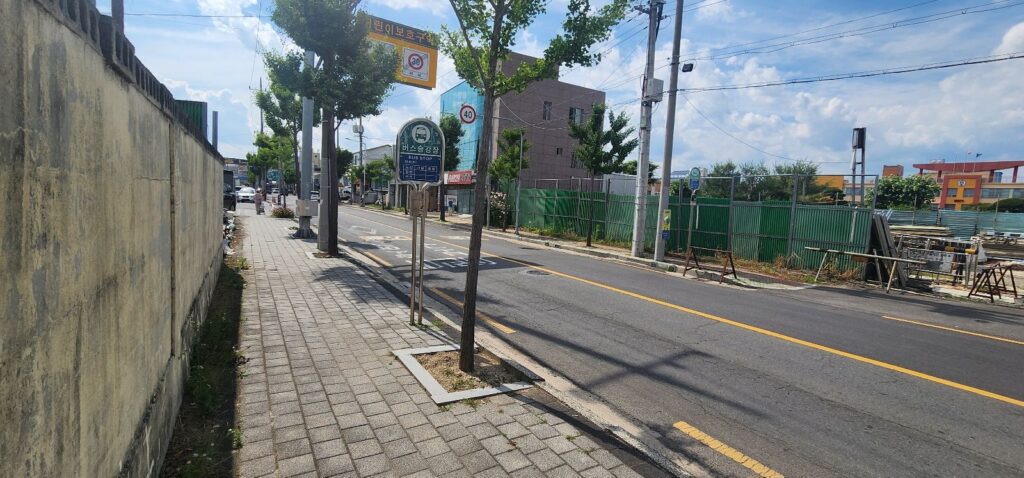
There is a need for improved cleanliness and more comprehensive information for bus users, such as detailed route maps and time schedules. While some cities in Korea provide the name of every bus stop, allowing users to easily track their location, here, only a few stations display this information on their boards. It is evident that navigating the bus system here can be a complex experience, particularly for new users, due to the less-than-user-friendly service.
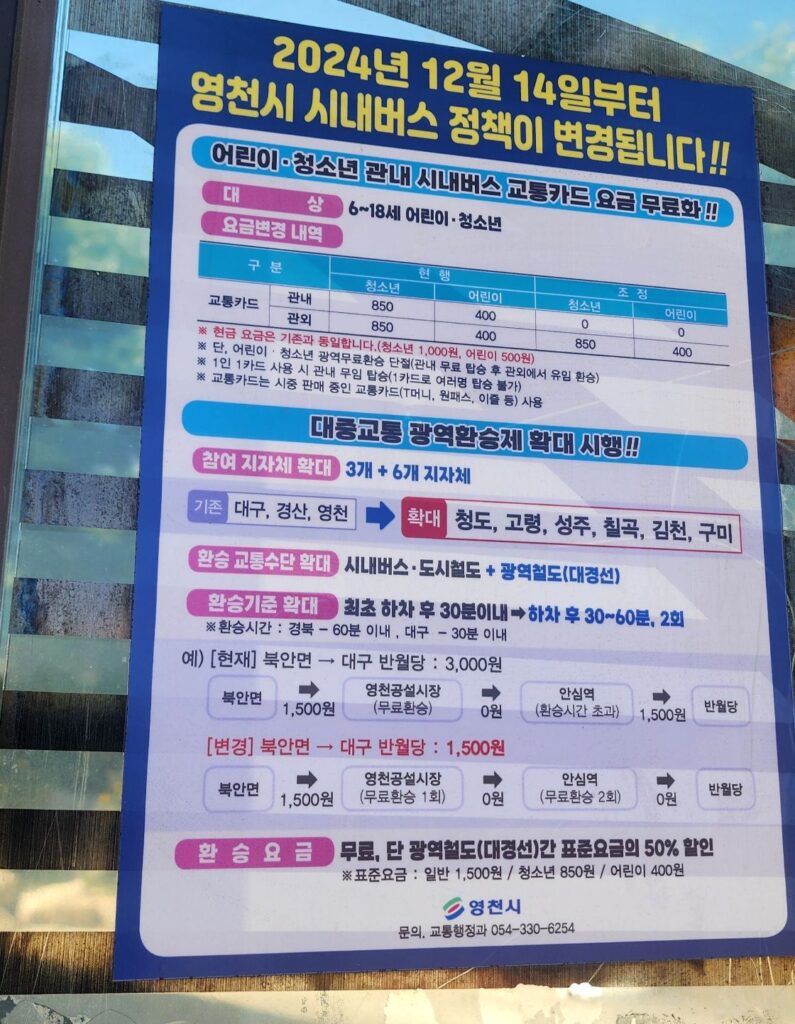
It appears that some papers regarding bus fares and the transportation system to other cities were affixed inside the bus. However, these documents seem to be quite outdated, possibly by at least two years. I distinctly recall my experience on a public bus in Yeongcheon and the apparent lack of attention to bus information.
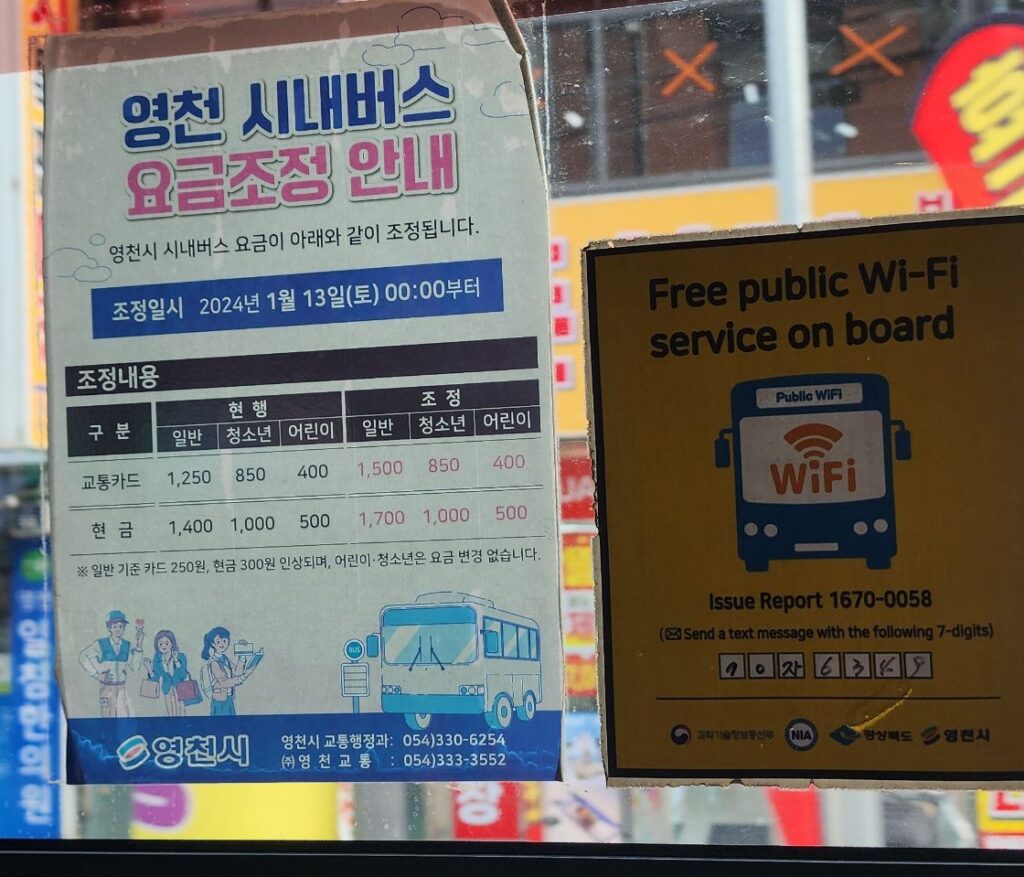
It was surprising to note that the bus fare information paper, which was already old a year ago, remains unchanged even now. Furthermore, there is a discrepancy in the bus fare information; one document states that the child fare is 500 won, while another indicates that it is free. It seems that the informational papers inside the bus are not being regularly maintained.